
Why Scheduled Newsletters Matter in E-Commerce
Email newsletters remain one of the most effective ways for e-commerce businesses to stay connected with their customers. They allow brands to share product updates, promotions, and content that keeps subscribers engaged with the store.
However, preparing and sending newsletters manually can quickly become time-consuming. As marketing responsibilities grow, maintaining a consistent communication schedule becomes increasingly difficult. Campaigns may be delayed, skipped, or rushed when teams are focused on other priorities.
Scheduled newsletters solve this challenge by automating the delivery of recurring campaigns.
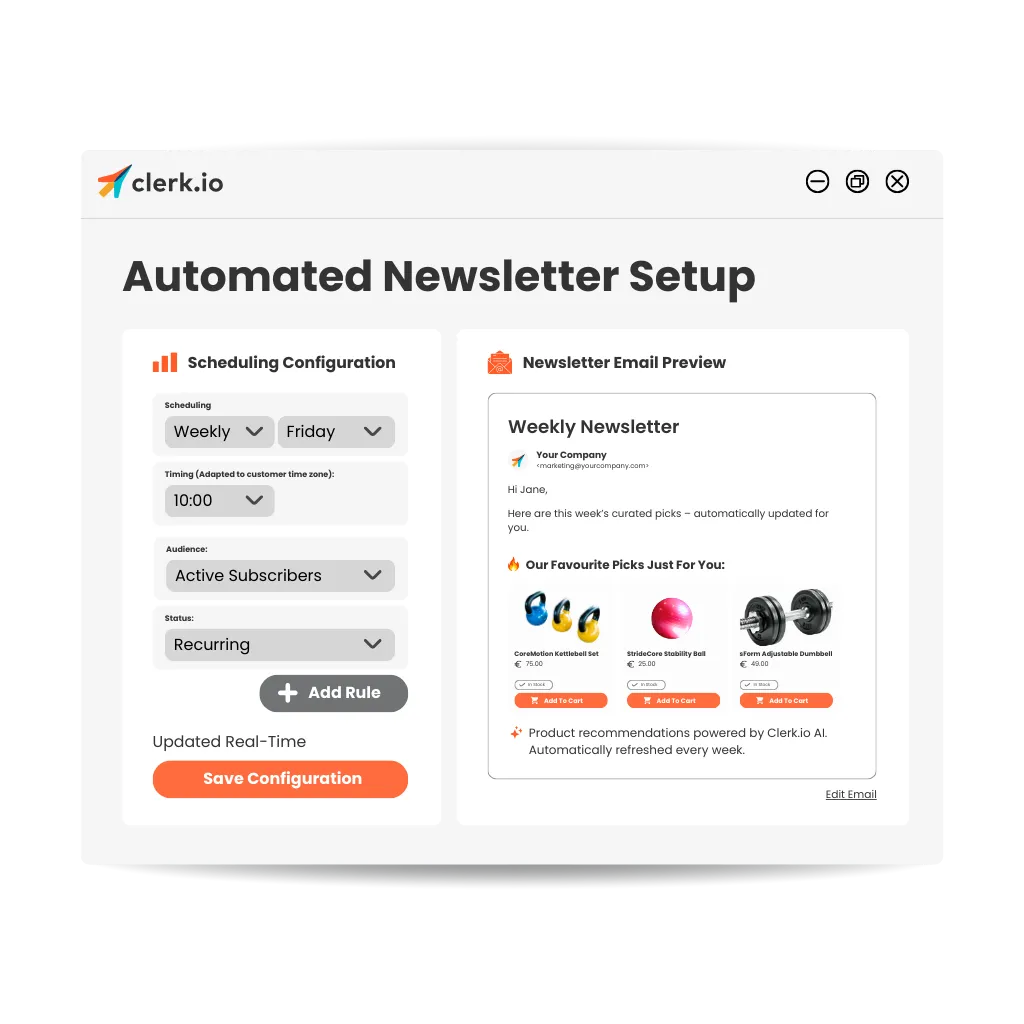
Instead of manually launching each email send, merchants can define a schedule that automatically delivers newsletters at regular intervals. This ensures subscribers receive consistent updates without requiring constant manual effort from the marketing team.
For example, a store might send weekly newsletters featuring new arrivals, product recommendations, and seasonal promotions. With automated scheduling, these campaigns can be prepared in advance and delivered automatically, maintaining steady engagement with subscribers.
By automating the sending process, marketing teams can spend less time managing individual campaigns and more time focusing on strategy, content, and customer experience.
From Manual Campaigns to Automated Email Delivery
Traditional newsletter workflows require marketers to manually prepare, schedule, and launch every campaign. As the number of subscribers and campaigns grows, this process becomes increasingly complex and difficult to manage consistently.
Scheduled newsletters introduce a more scalable approach.
Once a campaign schedule is defined, emails are delivered automatically according to the chosen interval. Campaigns can include personalized content that adapts to each recipient based on behavioral and customer data.
Because delivery is automated, stores can maintain consistent communication with subscribers even during busy marketing periods or seasonal campaigns.
This allows teams to maintain reliable engagement with their audience while reducing the operational workload required to manage recurring email sends.
How Scheduled Newsletters Work
Recurring Sends Newsletters are delivered automatically according to a predefined schedule.
Personalized Content Email content can adapt to each subscriber using behavioral and customer data.
Continuous Delivery Campaigns run consistently without requiring manual setup for every send.
Clerk.io automates newsletter delivery so e-commerce teams can maintain regular communication with subscribers while focusing on strategy rather than repetitive campaign management.
Use Case: Consistent Email Engagement
An e-commerce brand wants to send weekly newsletters highlighting new products, promotions, and editorial content.
Without scheduling, every campaign must be manually created and sent, increasing the marketing team’s workload and making it harder to maintain consistency.
With scheduled newsletters, campaigns run automatically at the chosen interval. Subscribers receive regular updates while the marketing team can focus on optimizing content and campaign performance.
Key Benefits of Scheduled Newsletters
- Consistent communication with subscribers
- Automated delivery of recurring email campaigns
- Reduced manual workload for marketing teams
- Personalized content for each subscriber
- Improved long-term customer engagement
By automating recurring campaigns, scheduled newsletters help e-commerce businesses maintain regular contact with their audience while simplifying campaign management.