
Why Past Purchase Segmentation Matters in E-Commerce
A customer’s purchase history is one of the strongest indicators of future intent. What shoppers have bought before often reveals their preferences, needs, and buying patterns.
However, many marketing campaigns rely on broad audience targeting that does not fully reflect real customer interests. Without using transaction data effectively, brands may miss opportunities to deliver more relevant experiences.
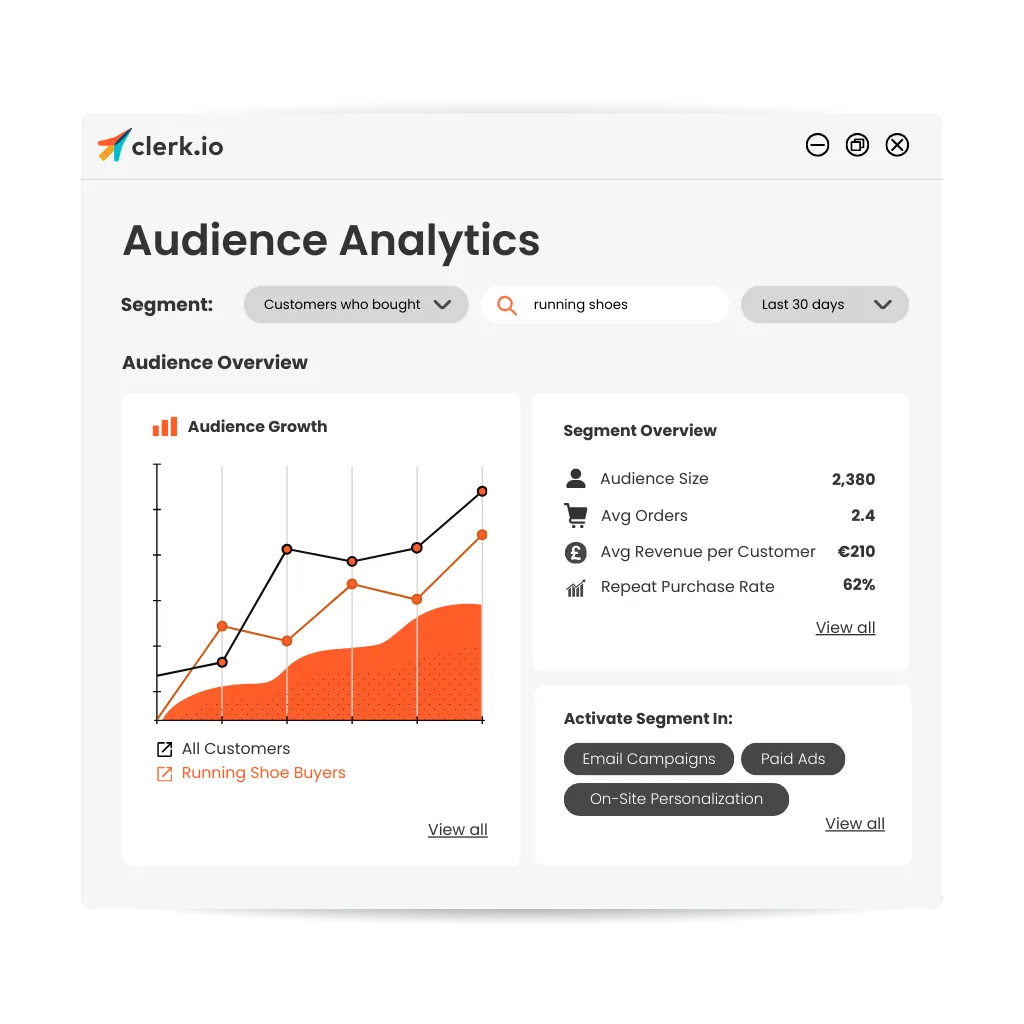
Past purchase segmentation helps businesses turn transaction data into meaningful customer audiences.
By analyzing previous purchases, brands can group customers based on the products, categories, or brands they have already shown interest in. This allows marketing, personalization, and product recommendations to reflect actual buying behavior.
As a result, campaigns become more relevant and better aligned with customer preferences.
From Transaction Data to Actionable Audiences
Purchase data contains valuable signals about customer interests and product relationships.
Past purchase segmentation transforms these signals into audience groups that can be used across marketing and personalization strategies.
Brands can create segments based on specific products, product categories, or brands customers have previously purchased. These segments can then be activated in campaigns, onsite personalization, and recommendation strategies.
Because the segments update automatically as customers continue shopping, targeting remains accurate and up to date over time.
How Past Purchase Segmentation Works
Purchase History Rules Segment customers based on the products, categories, or brands they have previously purchased.
Dynamic Audiences Segments update automatically as new purchases occur.
Cross-Channel Activation Use purchase-based segments across personalization, recommendations, and marketing campaigns.
Clerk.io continuously updates audience segments using transaction data to ensure they remain accurate and actionable.
Use Case: Targeting Based on Buying Behavior
An e-commerce brand wants to promote accessories to customers who recently purchased a core product.
Without purchase-based segmentation, campaigns reach a broad audience and may perform less effectively.
With past purchase segmentation, the brand can target customers who are most likely to be interested in related products. This increases campaign relevance and improves engagement and conversion rates.
Key Benefits of Past Purchase Segmentation
- Audience targeting based on real purchase behavior
- More relevant product recommendations and campaigns
- Improved cross-sell and upsell opportunities
- Dynamic segments that update with new purchases
- Stronger customer engagement and lifetime value
By using transaction data for segmentation, e-commerce brands can create more precise targeting strategies that reflect real customer interests.

